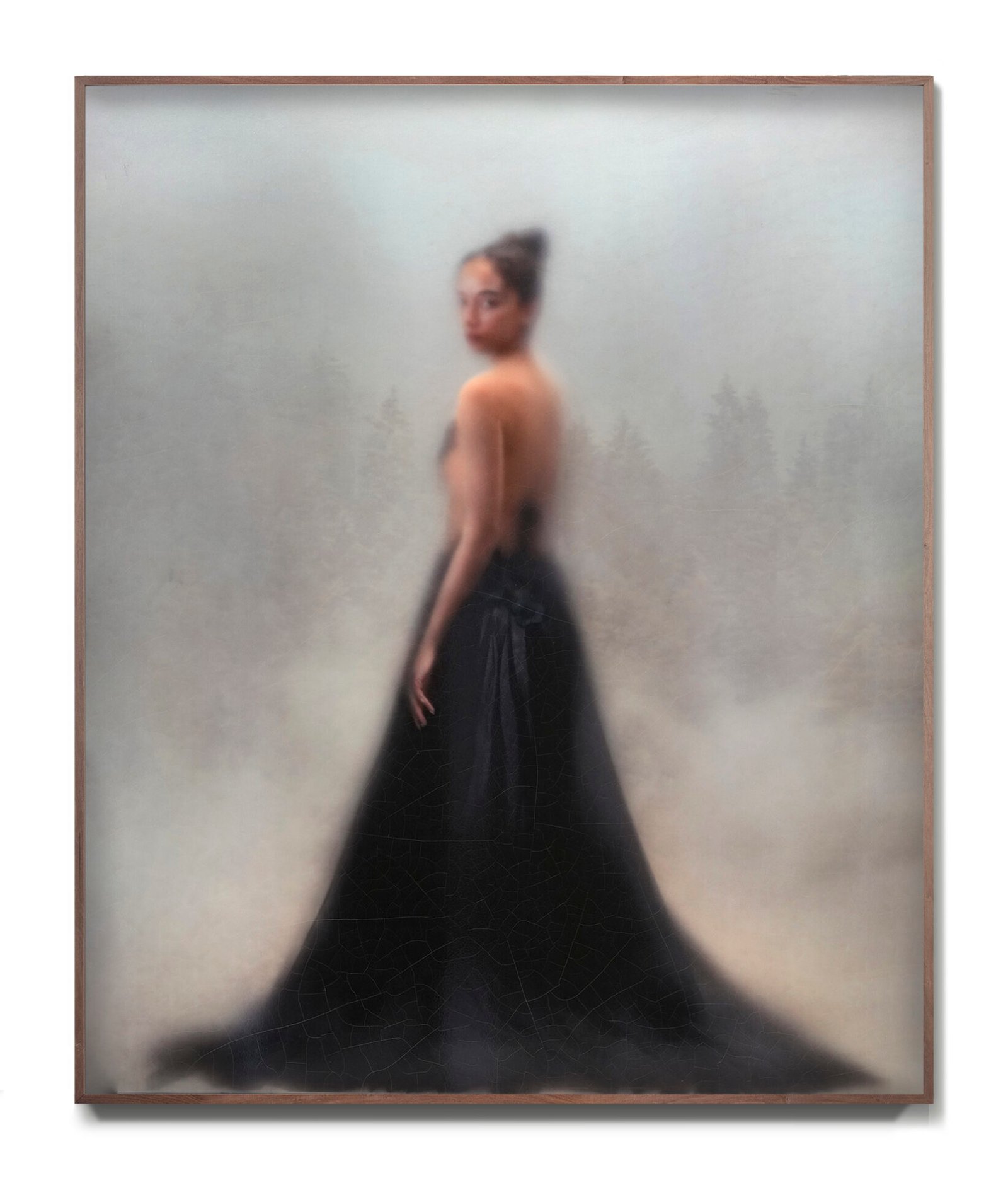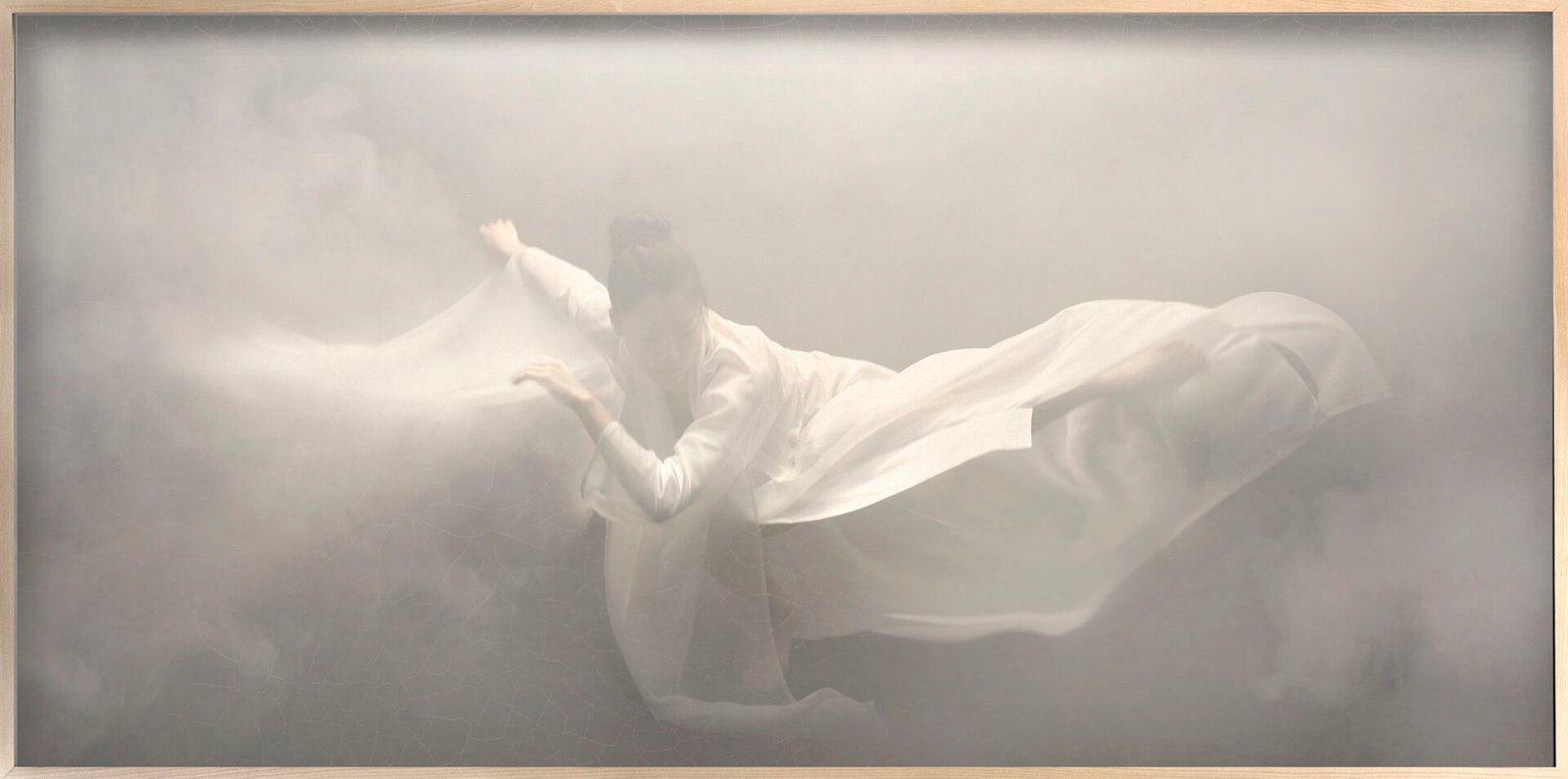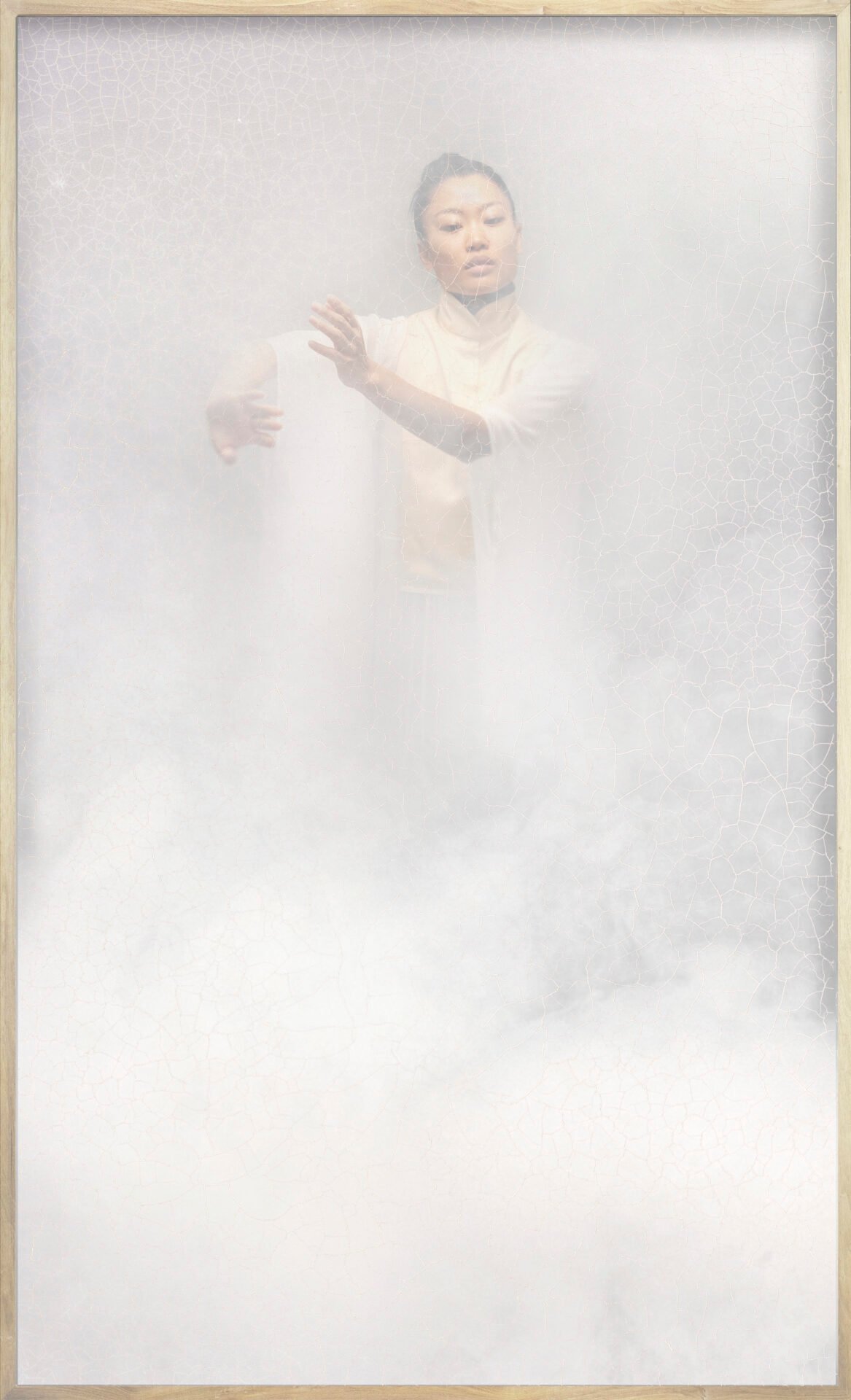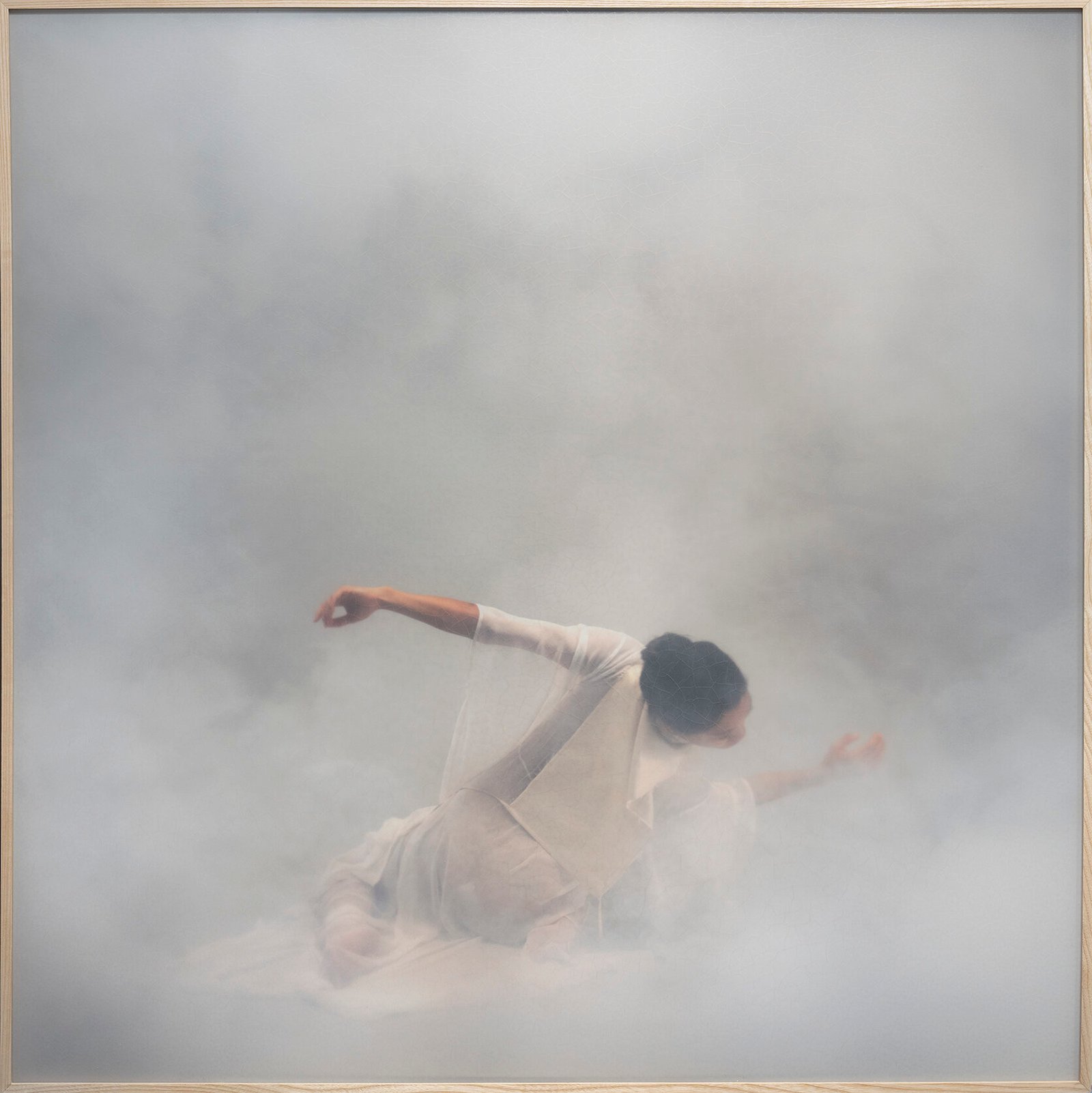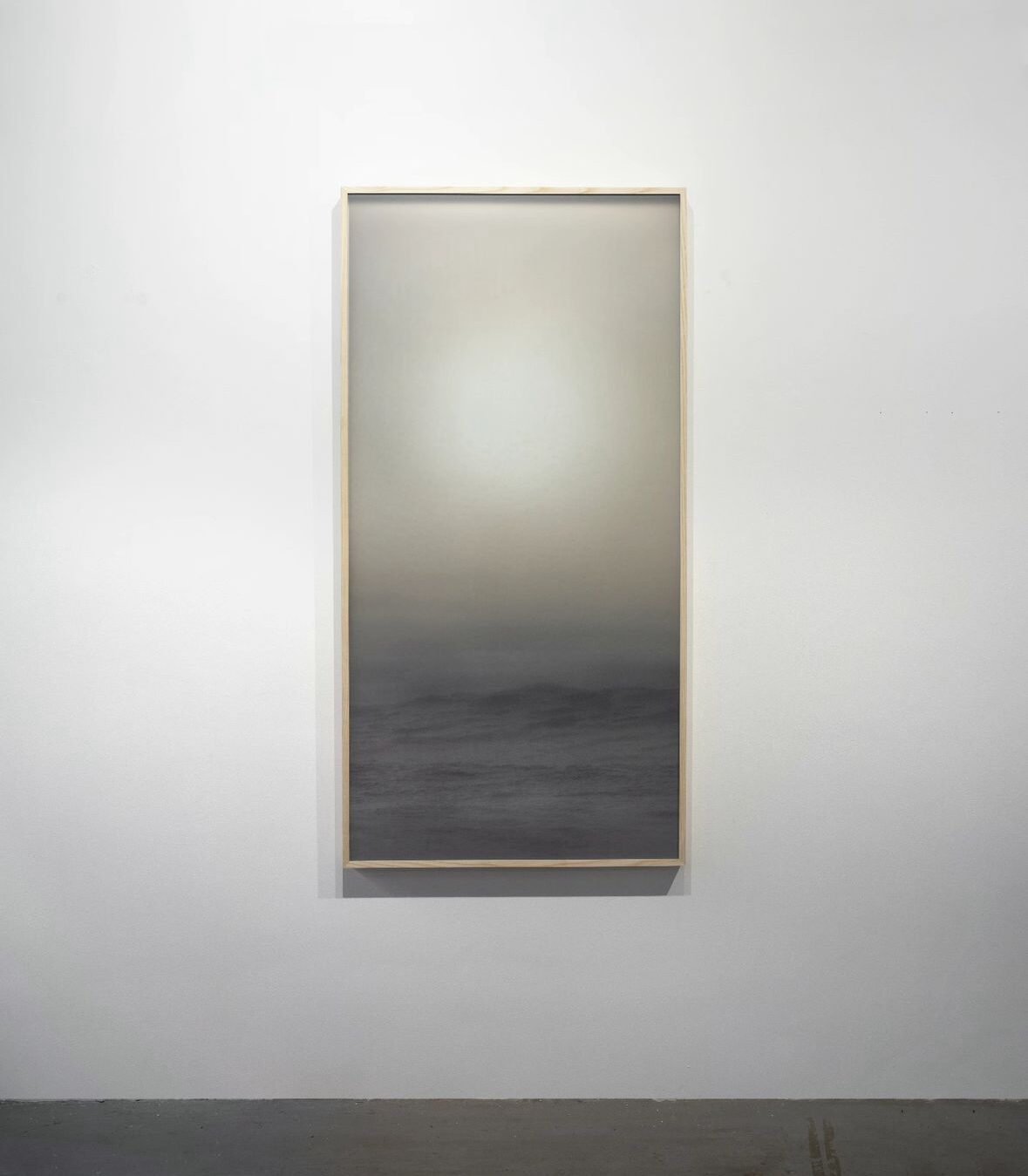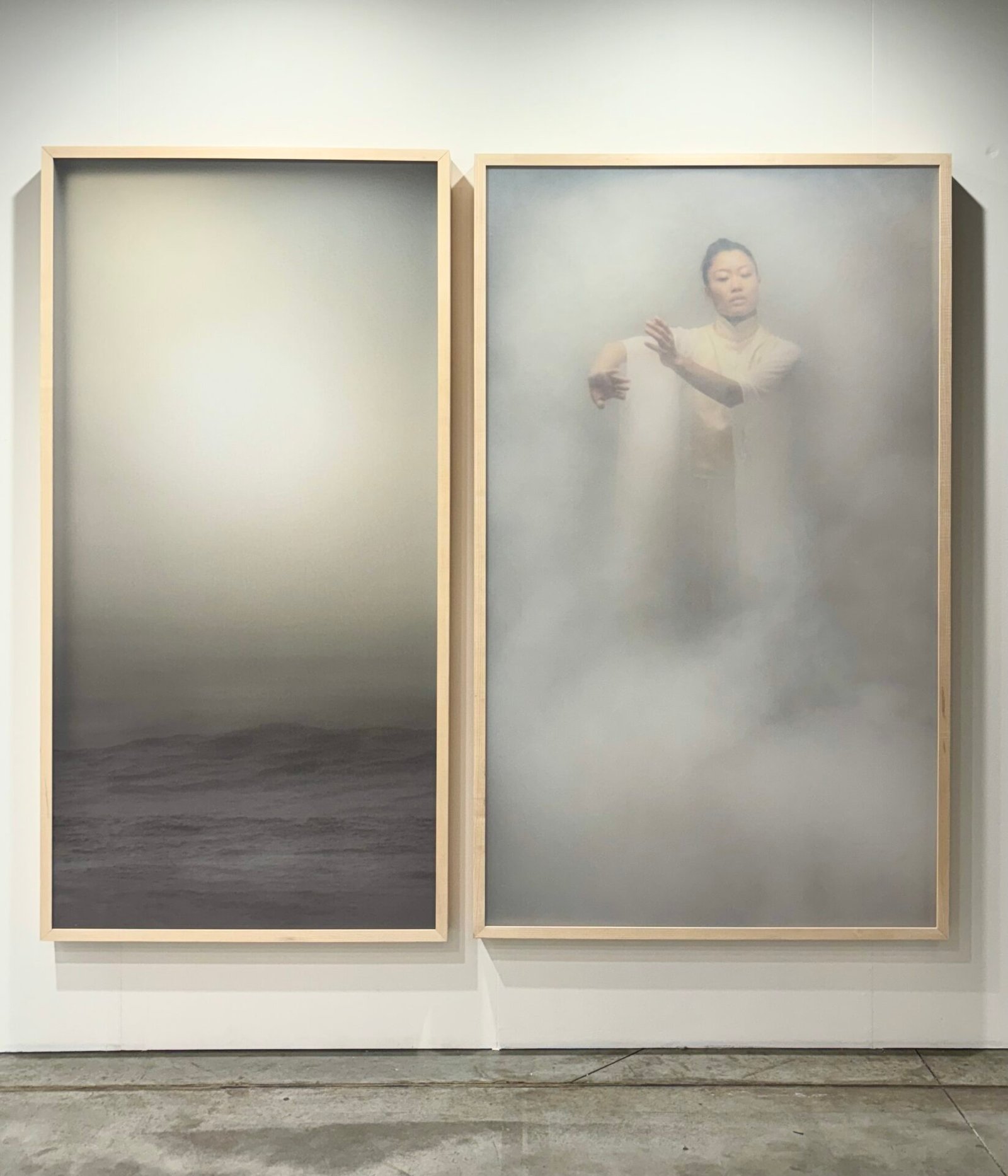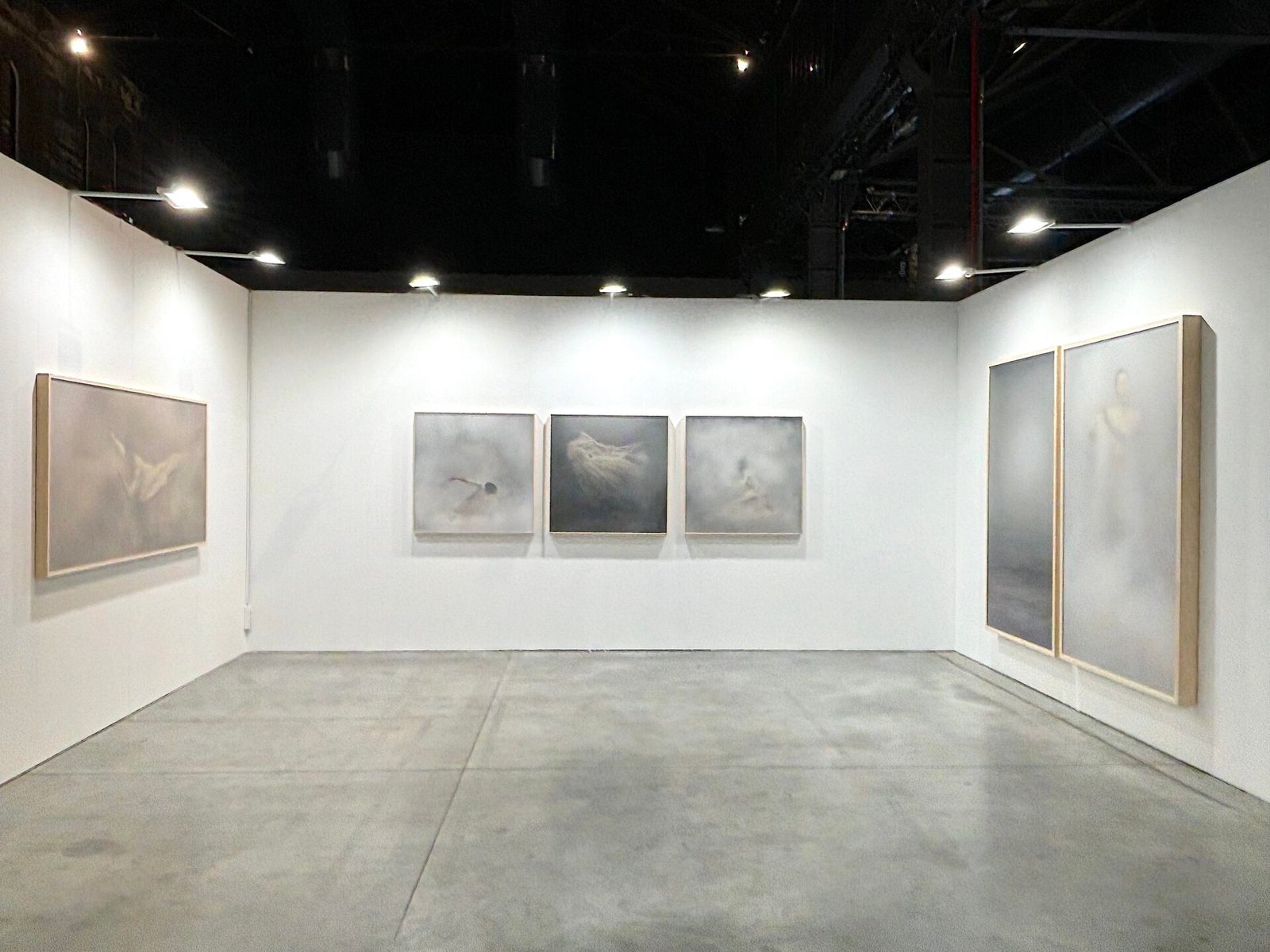
“The juxtaposition between the eternal and the temporal, beauty and decay, appearance and disappearance is my main theme.” All painters and photographers have the ability to stop time and capture a single moment. Faassen highlights that moment by adding a temporal element – not necessarily using literal references to vanitas but through the manipulation of materials. The use of craquelure is its symbol of time and introduces a visual element as it is oil paint and therefore sharp, contrasting with the rest of the blurry image. Most of the distance is created by the way the photo is taken, through an opaque medium. He prints the image on the same opaque support giving a further sense of distance. “What I also like about craquelure is the texture it gives to the surface or leather. The work becomes more material, more substantial, aiming for painting instead of photography and thus encouraging a different way of perceiving the work.”
Characteristic of Faassen’s works is his continuous innovative approach to materials, techniques and disciplines. In addition to painting and graphic art, Faassen dedicates much of his time to the photographic medium. It is in his photographic work that we recognize the Leiden painters who inspired him. His signature works depict classic 17th- century themes such as cityscapes, vanitas paintings, and flower arrangements.
Casper’s unique style, which mixes photography and painted layers in his work and juxtaposes subject (beauty) with form (decay), has won praise from critics and the public. His work has been exhibited at numerous international art fairs such as AIPAD New York, Photo London, Unseen, PAN Amsterdam and Photo Basel, where he won the ALPA award in 2019. His work is featured in private and public collections such as Frans Hals Museum (Haarlem), Museum de Lakenhal (Leiden), Haagsch Historisch Museum and Royal Netherlands Library (The Hague). Recently, the Fotografiska Museum in Stockholm and the Japanmuseum Sieboldhuis in Leiden have hosted solo exhibitions of Faassen’s work. His “View of the Hague” and “View of Dordrecht” were displayed alongside Jan van Goyen’s original masterpieces in the Historical Museum of the Hague and the Dordrecht Museum respectively.