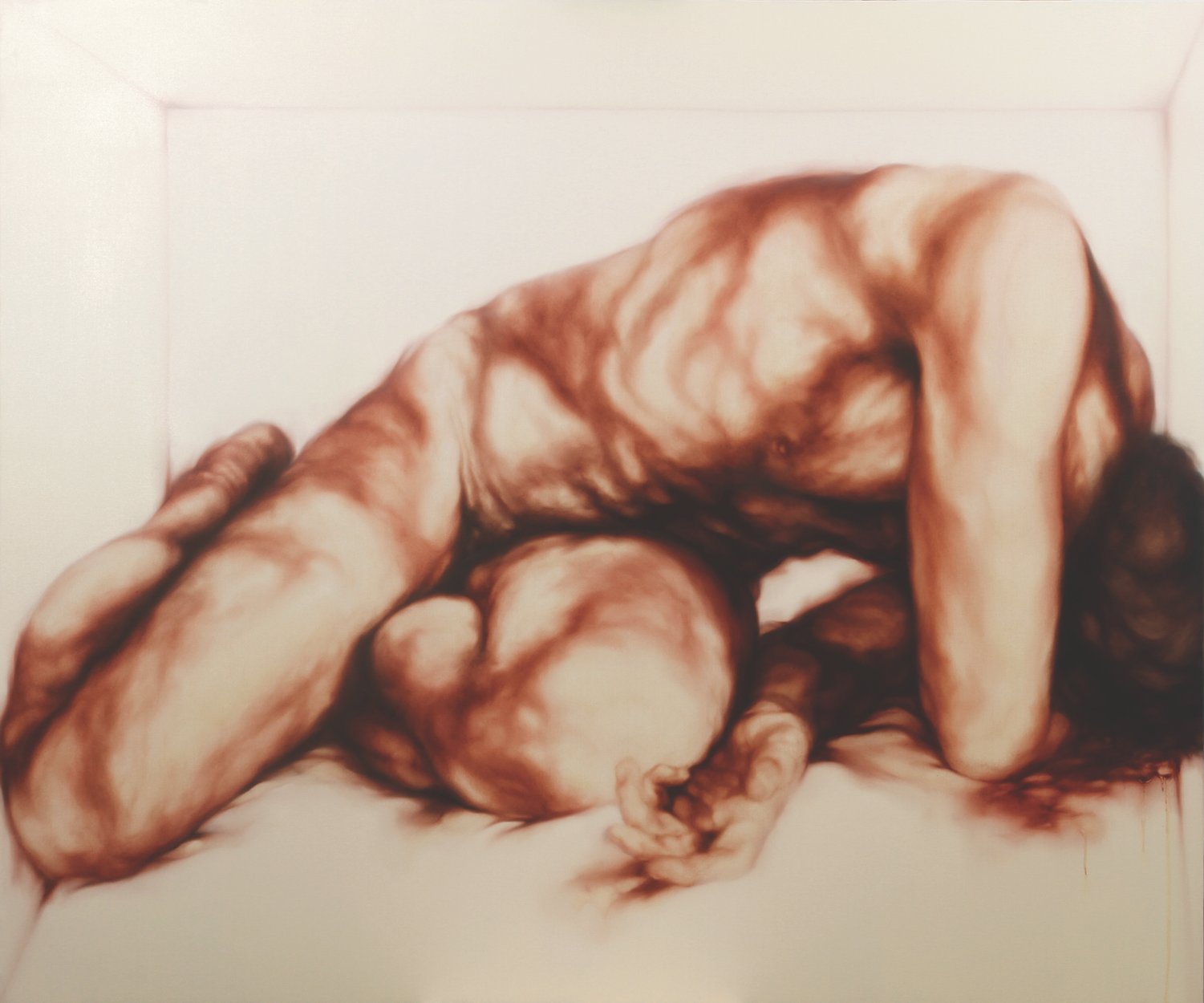
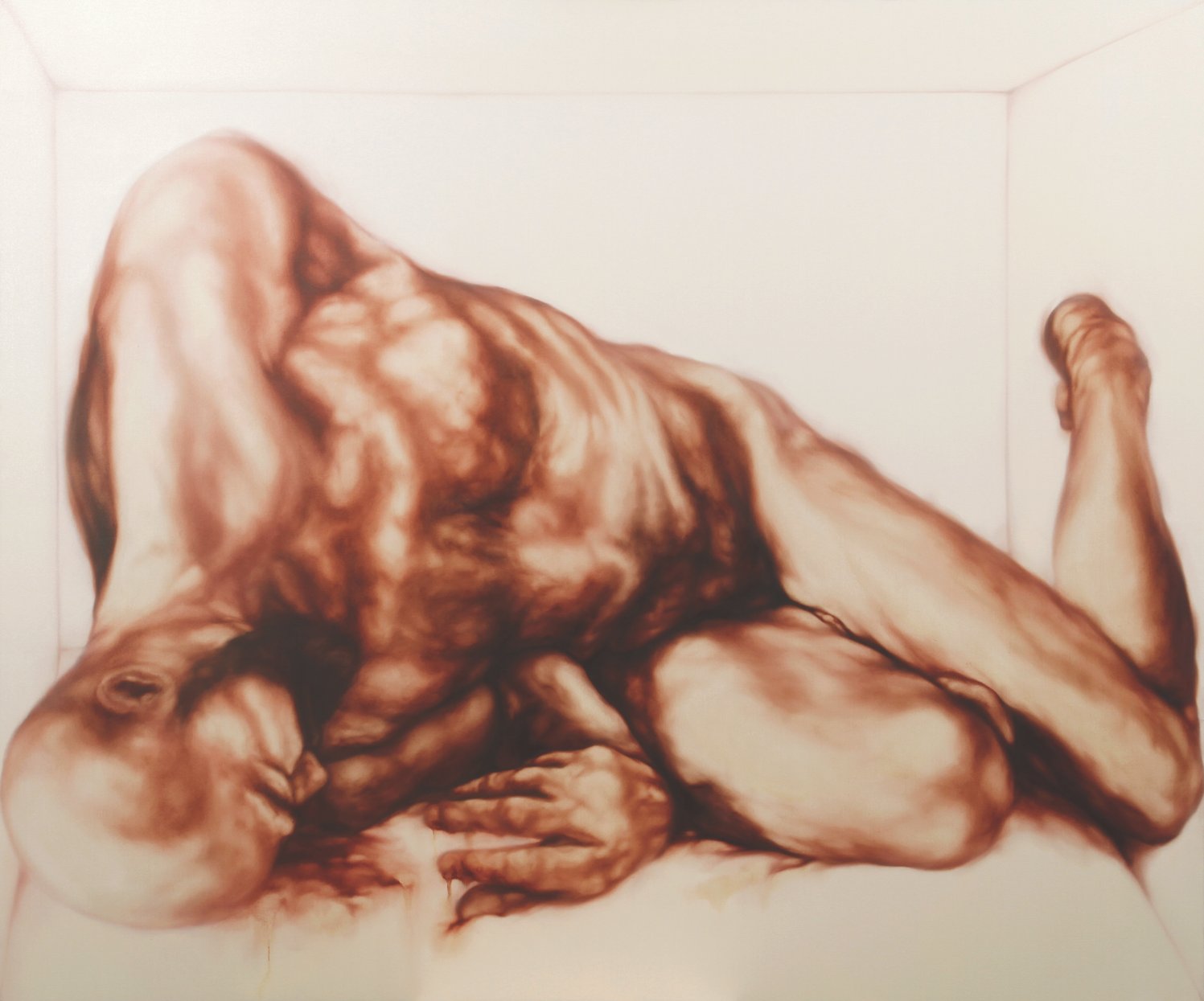
After 3 years from the last Milanese exhibition, Alessandro Bellucco returns to Milan with a solo show, ICONOCLASTE, curated by Francesca Alfano Miglietti and Claudio Composti, at the mc2gallery contemporary art. A mother and a son. An indissoluble and inexplicable bond, for anyone who is not a mother.
A symbiotic world for 9 months, first, a bond that remains for life, then.
Which unfortunately, at times, becomes suffocating and indistinct from a morbid protectionism that marks the growth of the child. The condition of “being a mother” always involves a strong emotional investment, as does not happen with any other psychological condition, for which the mother is capable of great love, up to and including sacrifice. However, the same condition can also generate extremely violent hatred, so that a mother can even kill her own child.
Alessandro Bellucco in his new work, ICONOCLASTE, once again addresses this relationship through the naked body. Destroying it, somehow.
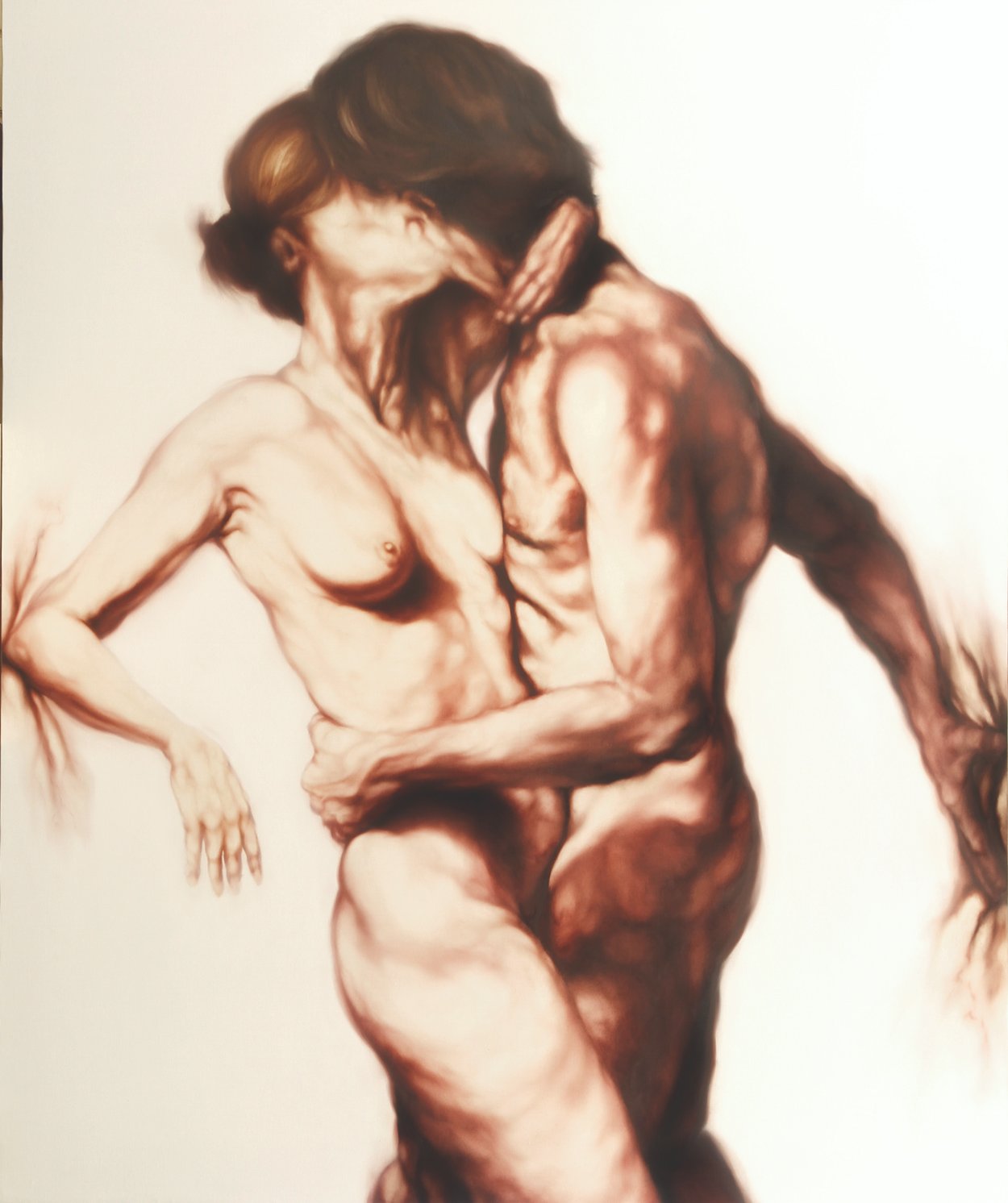
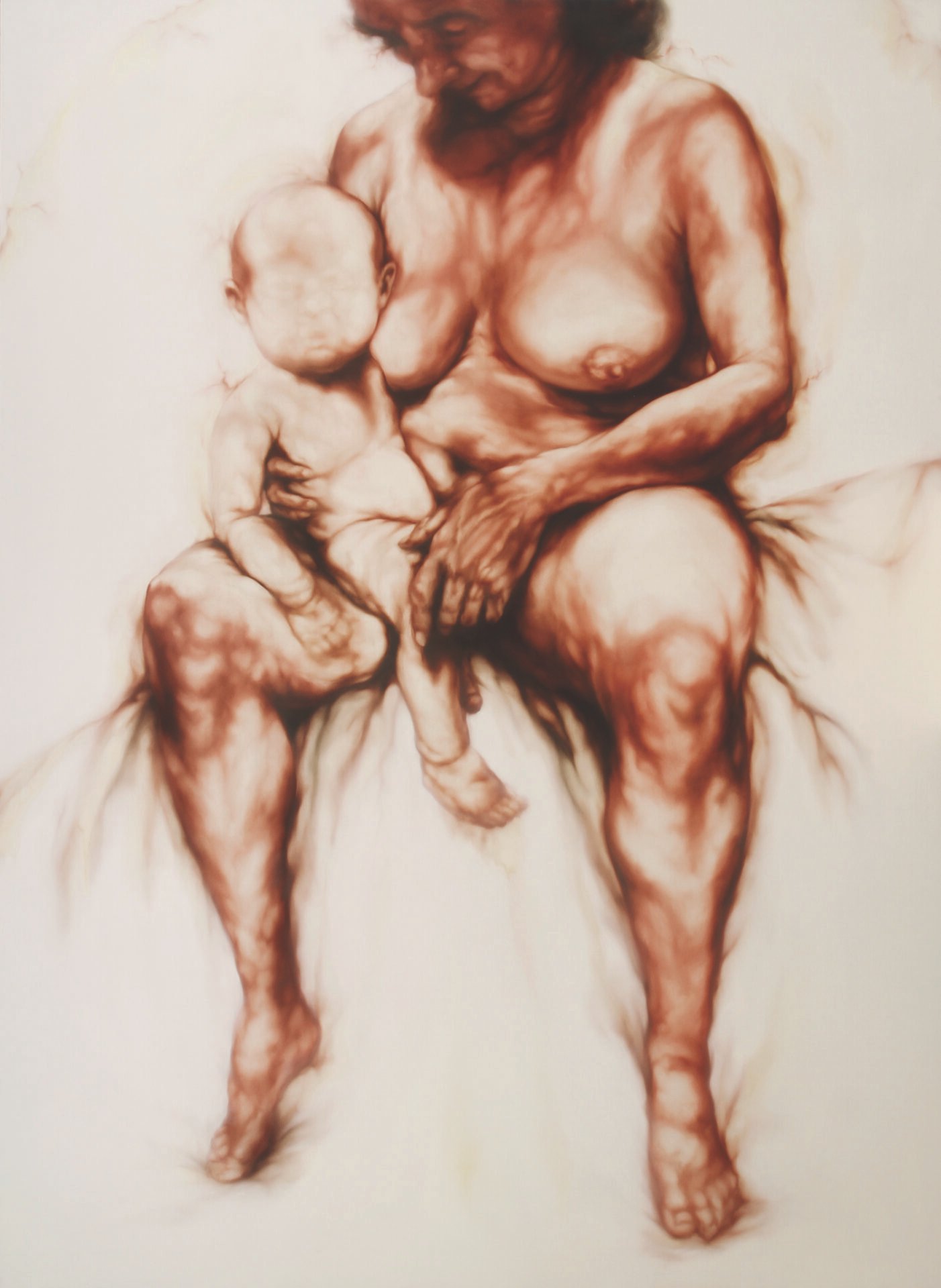
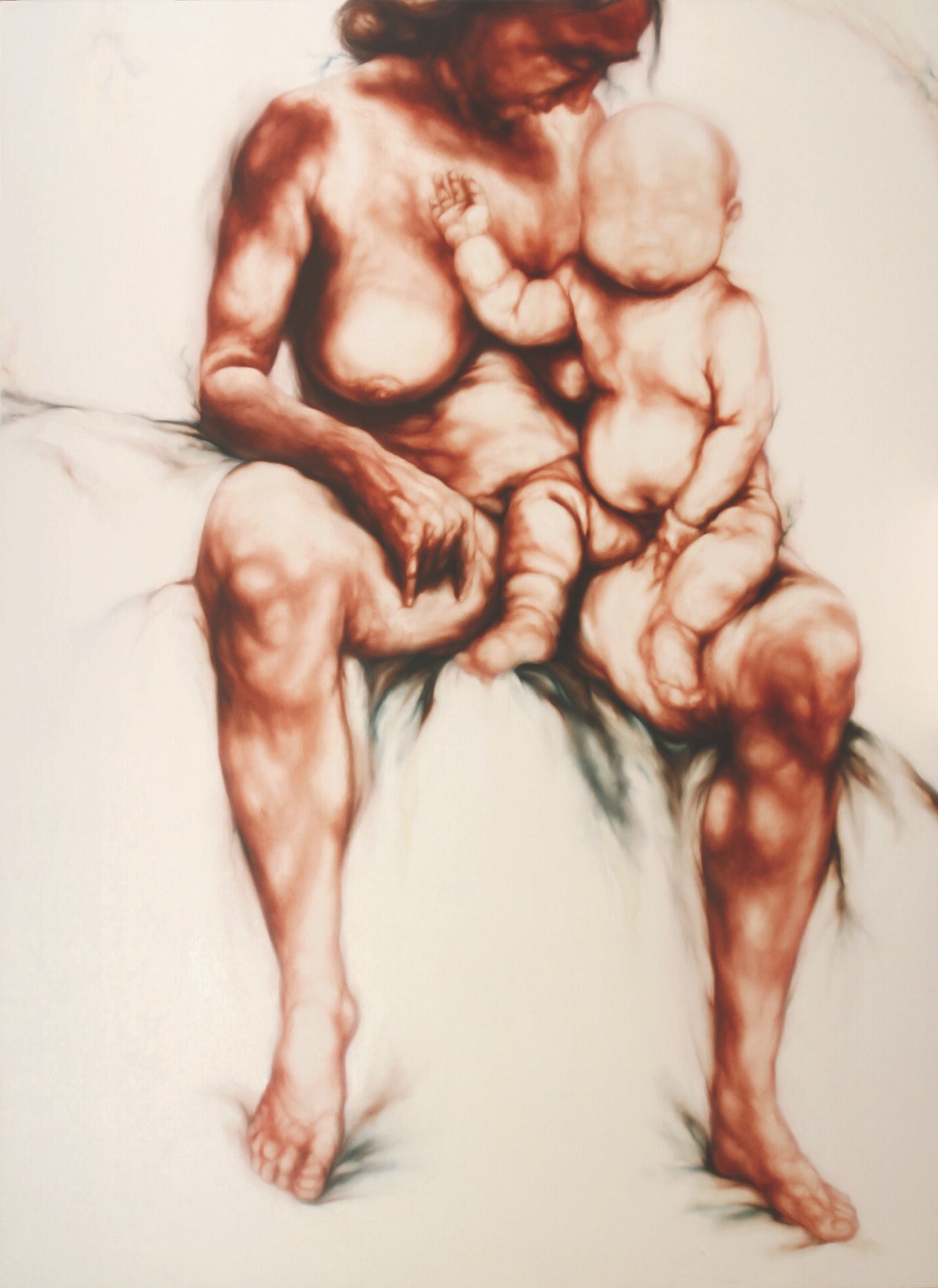
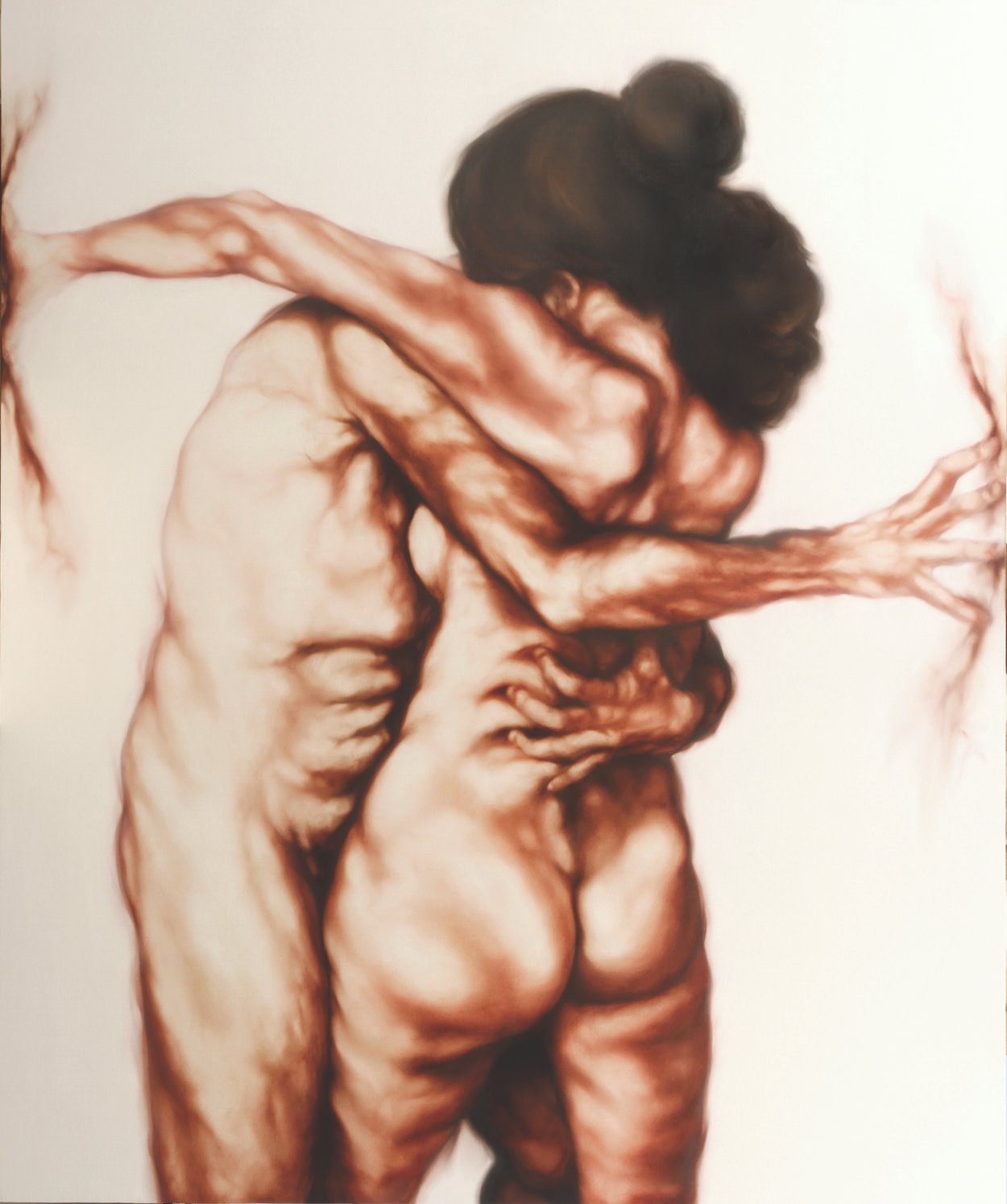
In art, the iconography of the Madonna with child, the loving mother par excellence, dates back to the Byzantine world. Bellucco is inspired by this iconographic model in painting these great Majesties, but bearers of a sick relationship in which motherhood becomes a source of discomfort. These mothers hold their babies on their knees who seem to push themselves in every way away from their mothers’ wombs, in search of that living space which will be the natural cutting of the (ideal) cord that will make them Men in the World. Alessandro Bellucco uses motherhood as a carcinogenic symbol of degeneration that is transmitted as educational DNA, often the origin of much psychological and character damage. The families they belong to are a melting pot of relationships, affections, small hatreds and indissoluble loves, often unsolvable in their unique relationship or non-communication. You don’t choose your family, they say. Alessandro Bellucco draws attention to the false myth of motherhood as unconditional love, which, instead, very often conceals complex emotional-psychological relationships. Let’s think about Greek literature, which gave us figures such as Oedipus or Medea, in which the relationship between mothers and children turns into tragedy and atrocious revenge. All the more atrocious if the one who carries out the murder is a mother, blood of our blood and true parent (i.e. the one she generates). This negative relationship also finds form in the two canvases that Alessandro Bellucco accompanies the two large Mothers/Majesties: two male figures on the ground, closed in a very narrow and narrow place (sick relationships?). Fallen heroes, similar but different, like brothers, who seem to have returned from a clash… they look like two Greek warriors who clashed in battle… the battle, perhaps, of their own affirmation, having become adults (but not Men) in front of Mothers/matrons. The same ones who hold children on their knees who are unaware, but somehow aware, of their Destiny from which they try, through their movements, to escape. An effort made even more evident by the (wise) use of subtraction painting that Bellucco uses to suggest, through the use of the white canvas, the weight of the bodies, where they are not even drawn. We also have examples of these difficult mother-child relationships in modern medical literature: think of the “Munchausen syndrome by proxy”: medical texts define this syndrome as “…a “fictitious” disorder in which the symptoms are created by the mother’s mind – often – to obtain attention and consideration from others; the “by proxy” form concerns secretly committing harmful acts on the child in order to then be able to look after and care for him, acquiring the prestigious role of the child’s savior… Psychologically the maternal bond is a very strong ambivalent bond in the two extreme polarities: one mother can love and take care of the child or she can hate him to the point of killing him…”.
Infanticide is a recurring crime in history, literature and theatrical dramas (see Medea, by Euripides). The thought of a parent killing their child evokes fantasies, dreams and fears. Psychoanalysis defines a very delicate moment in our psychological growth which is defined as “Oedipal crisis”. The mother-child symbiosis, necessary in the early stages of the child’s life, must resolve spontaneously and gradually. When the child, growing and differentiating himself, is perceived by the mother as “other than himself” and therefore as an autonomous being, different from her, we can consider him “out of danger”. A “normal mother” can always report many reasons why she finds herself holding it against her little one, however she chooses to accept her son’s diversity and not make him pay for it.
Alessandro Bellucco touches on the most intimate relationships to talk to us about MAN and his love/hate for Life, starting from the person who generates Life, the Woman, the true soul of the World for this immense power she has to “bring into the World” and which therefore makes her a goddess.
